
-

Envoyez-nous un courriel
sale@lscmagnetics.com -

Numéro de contact
+86 -13559234186
Envoyez-nous un courriel
sale@lscmagnetics.comNuméro de contact
+86 -13559234186
Fil de fer à béton ou attaches en plastique : lequel convient le mieux à votre chantier ?
Apr 27, 2026Dans la construction en béton armé, le ligaturage solide des barres d'armature est une étape cruciale pour garantir la stabilité de la structure. Bien que les matériaux de ligature ne supportent pas directement les charges structurelles, ils déterminent si l'armature se déplace lors du coulage du béton, ce qui influe directement sur la qualité finale de l'ouvrage. Actuellement, deux principales solutions sont disponibles sur le marché : les ligatures traditionnelles en fil d'armature et les nouvelles ligatures en plastique.
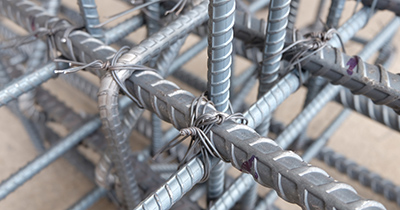
Le fil d'attache pour barres d'armature est un fil métallique flexible et très résistant, fabriqué en acier à faible teneur en carbone. Il est généralement recuit pour améliorer sa ductilité et faciliter sa manipulation. Selon le traitement de surface, il est principalement divisé en plusieurs catégories :
| Taper | Caractéristiques | Scénarios applicables |
| Fil de fer recuit noir | Surface revêtue d'huile antirouille, souple et facile à plier, coût minimal | Travaux généraux d'intérieur, reliure temporaire |
| Fil de fer galvanisé | Couche de galvanisation en surface, forte résistance à la rouille | Environnement extérieur humide |
| Fil de fer recouvert de PVC | Couche extérieure recouverte de plastique PVC, résistant à la corrosion et aux UV | Environnements difficiles, zones chimiques |
| Fil d'acier inoxydable | Résistance à la corrosion maximale, excellente résistance | Génie maritime, environnements hautement corrosifs |
Le diamètre du fil d'armature varie généralement de 0,55 mm à 2,0 mm (correspondant aux calibres 16 à 22). Le choix du fil dépend du diamètre de la barre d'armature et de la méthode de ligature. Par exemple, on utilise généralement un fil de calibre 18 à 22 pour ligaturer des barres d'armature de 8 mm de diamètre.
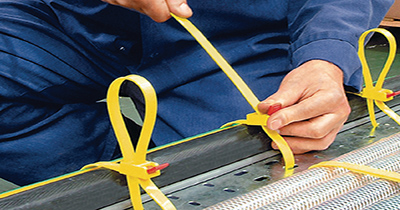
Les colliers de serrage en plastique sont généralement fabriqués à partir de matières plastiques techniques telles que le polypropylène (PP), le nylon ou le PET (polyéthylène téréphtalate). Ils se présentent sous forme de colliers préformés, certains dotés d'un mécanisme autobloquant permettant un serrage rapide à l'aide d'outils spécifiques.
Dans le secteur de la construction, les attaches en plastique constituent actuellement une solution relativement marginale, mais elles trouvent des applications dans des cas précis, comme la fixation de panneaux isolants, de supports temporaires et le regroupement de modules de batteries. Certaines bobines en plastique sont également conçues pour transporter et ranger des câbles, ce qui facilite les travaux sur le chantier.
Le fil d'armature présente un net avantage en termes de résistance à la traction. Le fil d'acier recuit peut atteindre une résistance à la traction de 300 à 480 N/mm², capable de résister aux vibrations et aux chocs lors du coulage du béton et de garantir le maintien en place de l'armature. Pour les applications de ligature croisée, le fil n° 18 offre une résistance au glissement supérieure de 40 % à celle du fil n° 22.
Les attaches en plastique, bien que présentant une certaine résistance à la traction, peuvent se ramollir, se déformer, voire se rompre sous l'effet de températures élevées, par exemple lors d'une exposition au soleil en été ou à la chaleur dégagée par l'hydratation du ciment. Leur stabilité à long terme dans les structures porteuses de charges importantes n'a pas été largement validée.
⚠️ Note de sécurité : Les normes de construction en Chine et dans la plupart des autres pays (telles que GB 50666 et ACI 318) n’interdisent pas explicitement les attaches en plastique, mais exigent généralement leur utilisation uniquement à des fins non structurelles ou temporaires, ou strictement comme fixation auxiliaire. Les structures porteuses, les cadres parasismiques, les ponts et les centrales nucléaires doivent utiliser des attaches métalliques.
| Matériel | résistance à la corrosion | Durée de vie |
| Fil de fer recuit noir | Faible (Sujet à la rouille) | Court terme/Intérieur |
| Fil de fer galvanisé | Moyen (Protection par revêtement de zinc) | Jusqu'à des décennies |
| Fil de fer recouvert de PVC | Haut | Jusqu'à 12 ans et plus |
| Fil d'acier inoxydable | Extrêmement élevé | Plus de 50 ans |
| Attaches de câble en plastique | Moyen (Résistant à la corrosion chimique mais visible aux rayons UV) | 5-10 ans (Extérieur) |
Il convient de noter que le fil d'attache galvanisé à chaud peut atteindre un grammage de revêtement de 300 g/m², lui conférant une durée de vie supérieure à 50 ans en milieu peu agressif. Les attaches de câbles en plastique résistent aux acides et aux bases, mais deviennent cassantes et se dégradent après une exposition prolongée aux rayons ultraviolets.
L'un des principaux atouts des colliers de serrage en plastique réside dans leur facilité d'installation. Certains modèles sont autobloquants et se fixent rapidement à l'aide d'une pince à colliers, ce qui est théoriquement plus rapide que de torsader un fil manuellement. Le feuillard PET a déjà démontré son efficacité dans des applications telles que le regroupement de modules de batteries.
Cependant, le fil de ligature pour barres d'armature n'est pas inefficace. La construction moderne utilise largement :
Fil de ligature à double boucle – avec des boucles aux deux extrémités, il se serre facilement avec un outil à crochet.
Machines à ligaturer les barres d'armature – 5 à 7 fois plus rapides que le ligature manuelle, effectuant automatiquement l'enroulement, le serrage et la coupe.
Pour les projets de grande envergure, l'efficacité globale du fil électrique combiné à des équipements automatisés n'est pas inférieure à celle des attaches de câble en plastique.
Du point de vue du prix unitaire des matériaux :
Le fil de ligature pour barres d'armature est extrêmement économique. Le fil recuit noir est le moins cher, tandis que le fil galvanisé, à prix modéré, reste la norme dans le secteur.
Les attaches en plastique ont généralement un prix unitaire plus élevé que les fils métalliques ordinaires et nécessitent souvent des outils spécialisés (comme un pistolet à attaches de câble).
De plus, le fil métallique est hautement standardisé, avec une chaîne d'approvisionnement mondiale bien établie et de vastes circuits d'achat. La stabilité et la variété de l'approvisionnement en attaches plastiques dans certaines régions restent toutefois à améliorer.
Fil de ligature pour barres d'armature :
Le matériau coûte environ 5 à 7 yuans le kilogramme. Un kilogramme permet de réaliser environ 150 à 250 nœuds (selon le diamètre du fil et le nombre de tours). Le coût du matériau par nœud est donc d'environ 0,02 à 0,05 yuan.
Attaches en plastique :
Pour des barres d'armature de 12 à 25 mm de diamètre, chaque attache coûte environ 0,1 à 0,4 yuan, soit 5 à 10 fois plus que le fil d'attache.
Mais n'oubliez pas les coûts de main-d'œuvre.
En supposant un salaire horaire de 40 yuans :
Attacher un nœud avec du fil prend environ 6 secondes → coût de main-d'œuvre = 0,067 yuan
Attacher un nœud avec un lien en plastique ne prend que 2 secondes environ → coût de la main-d'œuvre = 0,022 yuan
Maintenant, additionnez les coûts des matériaux et de la main-d'œuvre :
Coût total du fil ≈ 0,03 (matériaux) + 0,067 (main-d'œuvre) = 0,097 yuan/nœud
Coût total des attaches en plastique ≈ 0,2 (matériau) + 0,022 (main-d'œuvre) = 0,222 yuan/nœud
Dans cet exemple, les attaches en plastique restent donc nettement plus chères.
Cependant, si le projet exige un calendrier très serré et que les coûts de main-d'œuvre sont élevés (comme sur les marchés européens ou américains), la différence de coût total peut se réduire – et dans certains cas, les attaches en plastique pourraient même être compétitives en termes de coûts, voire légèrement moins chères.
Environnements humides/marins – Le fil d’acier galvanisé ou inoxydable offre d’excellentes performances ; les attaches en plastique nécessitent des formulations spéciales résistantes aux UV.
Exigences du code – Les codes de construction les plus courants (par exemple, ACI, JGJ) préconisent toujours l’utilisation de colliers de serrage en fil de fer. Si des attaches en plastique sont utilisées comme alternative, elles doivent être conformes aux normes en vigueur (telles que la norme chinoise GB/T 30041-2013) et faire l’objet d’une validation technique.
✅ Travaux sur de grandes structures en béton (ponts, immeubles de grande hauteur, infrastructures)
✅ Projets nécessitant une durabilité à long terme en extérieur
✅ Projets avec un contrôle strict des coûts
✅ Votre équipe dispose déjà de méthodes de construction et d'outillage éprouvés.
✅ Environnements à haute température, à forte humidité ou hautement corrosifs (utiliser du fil galvanisé, en acier inoxydable ou recouvert de PVC)
✅ Gestion de petits projets ou de structures de soutien temporaires
✅ La protection contre la rouille n'est pas essentielle et vous recherchez une option extrêmement légère
✅ Fixation des panneaux isolants, des tuyaux ou d'autres éléments non structuraux
✅ Une isolation électrique spéciale est requise
Pour les applications structurelles critiques, privilégiez le fil de ligature recuit traditionnel. Les colliers de serrage en plastique sont plus adaptés comme accélérateur de mise en œuvre dans les zones secondaires ou comme aide au positionnement dans les éléments préfabriqués en béton.
Si vous optez pour des colliers de serrage en plastique, assurez-vous qu'ils soient fabriqués en nylon résistant aux alcalis (comme le PA66 modifié) et demandez au fabricant un rapport de test de durabilité. Il est également conseillé de réaliser des essais à petite échelle dans des zones non critiques afin de vérifier l'intégrité des colliers après la mise en place du béton.
Sur votre prochain chantier, pensez à avoir sous la main les deux options : du fil de fer pour l’armature principale et des attaches en plastique pour fixer rapidement les renforts de répartition. Utilisées judicieusement, elles vous permettront de garantir la sécurité et le respect des délais.
Whatsapp : +86 -13559234186
E-mail : sale@lscmagnetics.com
Tél : +86 -13559234186