-

Envoyez-nous un courriel
sale@lscmagnetics.com -

Numéro de contact
+86 -13559234186
Envoyez-nous un courriel
sale@lscmagnetics.comNuméro de contact
+86 -13559234186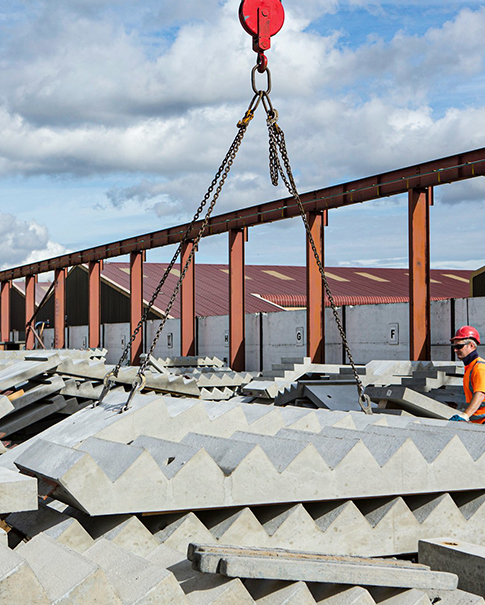

Que sont les panneaux muraux préfabriqués ?
Les panneaux muraux préfabriqués se divisent principalement en deux catégories selon leur fonction : les panneaux muraux intérieurs et les panneaux muraux extérieurs. Les panneaux muraux intérieurs servent essentiellement à cloisonner les espaces et doivent assurer une isolation acoustique et une protection contre l’incendie ; les panneaux muraux extérieurs, quant à eux, sont beaucoup plus polyvalents. Ils doivent non seulement être porteurs ou autoportants, mais aussi répondre aux exigences en matière d’isolation thermique, d’étanchéité à l’eau, de résistance au gel-dégel et même de finitions architecturales.
Comment sont-ils fabriqués ?
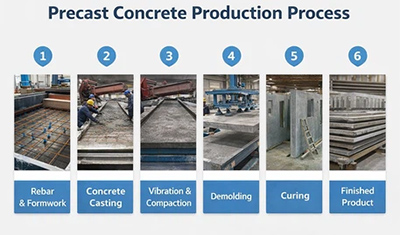
La production de panneaux muraux préfabriqués est un processus industriel rigoureux, dont le cœur réside dans le savoir-faire artisanal. Les principales étapes de production sont les suivantes :
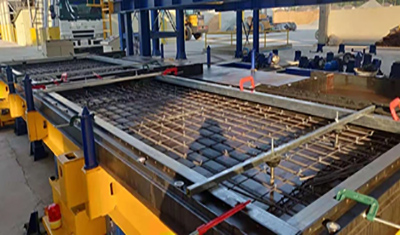
Tout d'abord, le moule est préparé et assemblé. Conformément aux plans, il est nettoyé et un agent de démoulage est appliqué. Les pièces encastrées, telles que les crochets de levage, les boîtes électriques et les manchons de raccordement, sont ensuite installées.
Vient ensuite la mise en place des armatures et le coulage du béton. Un treillis métallique préfabriqué est positionné à l'intérieur du moule. Pour les murs nécessitant une isolation, des couches d'isolant sont ajoutées afin de former une structure en sandwich. Le béton est ensuite coulé et compacté à l'aide d'une table vibrante.
L'étape suivante est le durcissement. Les panneaux muraux, encore dans leurs moules, sont introduits dans une chambre de durcissement où la température contrôlée accélère l'hydratation du ciment, permettant au béton d'atteindre plus rapidement sa résistance nominale. Différentes méthodes existent, notamment le coulage en moule plat et le coulage en moule vertical, ce dernier offrant la meilleure productivité.
Enfin, le démoulage et le contrôle qualité sont effectués. Après leur retrait des moules, les panneaux sont rigoureusement contrôlés afin de vérifier leur précision dimensionnelle, leur résistance et leur état de surface. Seuls les produits conformes aux normes sont expédiés sur le chantier.
Avec la sophistication croissante des technologies de préfabrication du béton et le durcissement des exigences de production, les produits magnétiques se sont imposés comme une innovation clé. Agissant comme des « pinces invisibles » tout au long du processus de fabrication, ils remplissent des fonctions que les pinces traditionnelles ne peuvent égaler, garantissant ainsi efficacité et précision. Dans les usines modernes de panneaux préfabriqués, les produits magnétiques font leurs preuves à différentes étapes, notamment de la manière suivante :
1. Sur un moule nettoyé, les ouvriers doivent assembler rapidement les bords du panneau mural — les moulures de chant. L'installation traditionnelle des moulures de chant repose sur de nombreux boulons, colliers ou soudures, ce qui la rend longue et laborieuse. De nos jours,Coffrage magnétiquesont devenues la norme dans l'industrie.
Ces coffrages magnétiques intègrent de puissants aimants en néodyme dans leur base, générant des forces d'adhérence magnétique de 100 à 2 000 daN (environ 100 à 2 000 kg) dans un volume très compact. L'opérateur place simplement le moule de bord à l'endroit souhaité sur le support, actionne légèrement un interrupteur rotatif pour activer les aimants, et le moule est maintenu fermement en place – sans boulons. Ce système de « positionnement et d'attraction » réduit le temps d'assemblage des moules classiques de plusieurs dizaines de minutes à quelques minutes seulement. Pour un ajustement ou un démoulage, une nouvelle rotation de l'interrupteur démagnétise l'unité, permettant un retrait facile. Les systèmes avancés, tels que le moule de bord magnétique sans encoche oblique, permettent d'obtenir des bords de composants parfaits sans matériau de remplissage, améliorant considérablement la qualité de finition des panneaux.
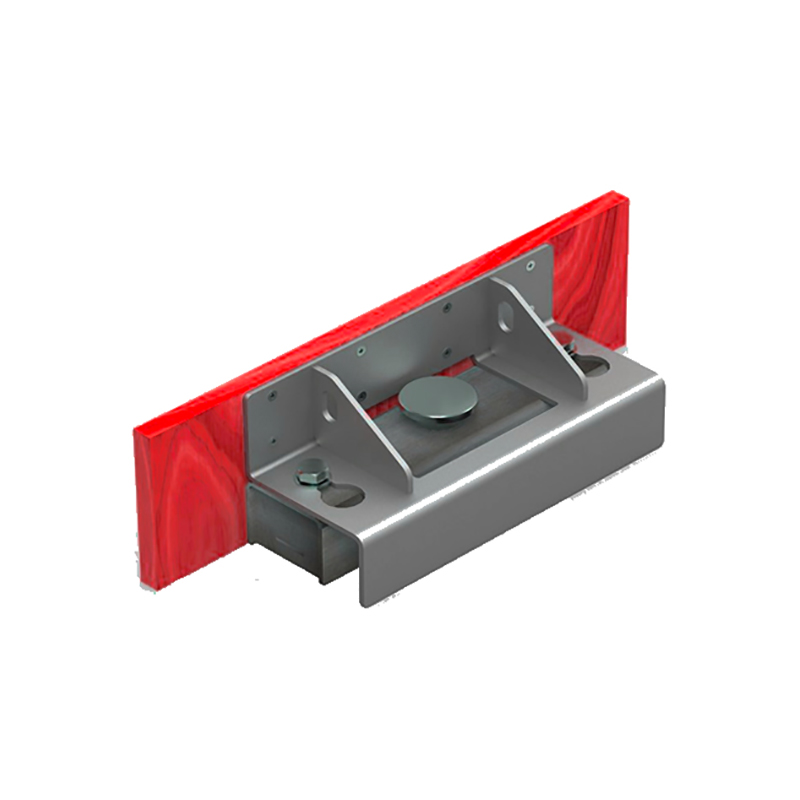
2. Lors de l'installation d'éléments encastrés tels que des cadres de fenêtres ou des boîtes de jonction électriques, comment s'assurer de leur maintien en place sous les forces importantes exercées lors du coulage du béton ? Les produits magnétiques apportent une solution simple. Grâce à leur conception spéciale, ils peuvent être utilisés pour fixer des éléments encastrés. bases de fixation magnétiquesDes composants tels que les fixations de cadre de fenêtre et les localisateurs de boîtes de jonction peuvent être solidement fixés au moule ou au profilé de bord. Cette forte adhérence magnétique garantit le positionnement précis de chaque pièce encastrée, ce qui est essentiel pour une installation ultérieure réussie.
3. Pour les panneaux muraux à disposition inversée intégrant une finition décorative (carrelage ou pierre, par exemple), les produits magnétiques jouent un rôle crucial. Lors de la fabrication du parement extérieur, les ouvriers disposent d'abord les panneaux décoratifs sur le moule. Afin d'éviter leur déplacement lors du vibrage du béton, des fixations et des boîtes magnétiques sont placées dessus.
Les fixations magnétiques, grâce à leur puissante attraction pour le moule en acier situé en dessous, exercent une pression vers le bas qui plaque fermement les panneaux décoratifs contre la surface du moule, les empêchant de flotter. boîte magnétique Il sert de protection, enveloppant le dispositif de maintien et empêchant le béton fraîchement coulé d'entrer en contact avec lui. Une fois la vibration terminée, les dispositifs de maintien magnétiques et les boîtes peuvent être facilement retirés et réutilisés pour le panneau suivant — un procédé à la fois très efficace et économique.
En résumé, l'adoption des panneaux muraux préfabriqués constitue une étape majeure dans la modernisation de l'industrie du béton. Son importance se manifeste à travers trois transformations clés :
Amélioration de l'efficacité et transformation des méthodes de construction : l'utilisation de panneaux muraux préfabriqués dans la construction préfabriquée permet de transférer une grande partie des travaux de terrassement en usine. Ceci réduit considérablement le besoin de coffrage et de main-d'œuvre sur site, rendant possible le levage et la pose mécanisés et raccourcissant ainsi significativement les cycles de construction. Dans certains projets de pointe, la technologie intégrée des panneaux muraux peut réduire la durée de construction jusqu'à 30 %.
Qualité et performances accrues : L’environnement de production en usine offre une qualité et un contrôle nettement supérieurs à ceux d’un chantier traditionnel. Les panneaux muraux préfabriqués sont compactés et durcis dans des moules en acier de précision, ce qui garantit des tolérances dimensionnelles minimales, une finition de surface lisse et impeccable, ainsi qu’une verticalité conforme aux exigences des enduits haut de gamme. Dans de nombreux cas, ils peuvent être peints ou finis directement, ce qui élimine le besoin d’une couche d’enduit supplémentaire, réduit le poids total et évite les défauts courants tels que les zones creuses et les fissures.
Des atouts écologiques et un modèle industriel transformé : les panneaux muraux préfabriqués illustrent parfaitement la construction écologique, incarnant les principes des « quatre économies et une protection de l’environnement » (économies d’énergie, de terres, d’eau et de matériaux, tout en préservant l’environnement). Ils s’inscrivent pleinement dans les objectifs nationaux de « double bilan carbone » et dans la dynamique de construction industrialisée, contribuant ainsi à faire évoluer le secteur du bâtiment de pratiques extensives et énergivores vers un modèle plus performant et durable.
Whatsapp : +86 -13559234186
E-mail : sale@lscmagnetics.com
Tél : +86 -13559234186