-

Envoyez-nous un courriel
sale@lscmagnetics.com -

Numéro de contact
+86 -13559234186
Envoyez-nous un courriel
sale@lscmagnetics.comNuméro de contact
+86 -13559234186

En construction béton armé, l'épaisseur de l'enrobage détermine directement la durabilité, la résistance au feu et la capacité portante de la structure. L'obtention d'une épaisseur d'enrobage précise dépend souvent de petits accessoires discrets : les dispositifs de positionnement des armatures. Actuellement, les deux produits les plus courants sur le marché sont les supports d'armatures en acier et les entretoises en plastique. Chacun présente des avantages et des inconvénients. Cet article propose une comparaison détaillée en termes de propriétés des matériaux, de performances mécaniques, de facilité de mise en œuvre et de coût.
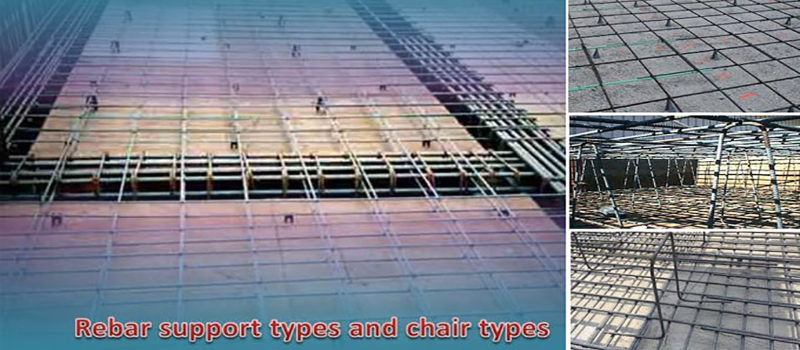
Les supports de barres d'armature sont généralement fabriqués à partir de barres d'acier rondes ou cintrées, pliées et soudées en forme de « Π » ou de vague continue. Ils supportent la couche supérieure du treillis d'armature, en maintenant la distance requise entre le treillis et le coffrage.
Formes courantes : chaises à un seul pied, chaises à deux pieds, chaises continues et chaises hautes spécialement conçues pour les dalles composites.
Fonction principale : supporter le poids des armatures et des charges de construction, en empêchant l'affaissement ou la déformation de la couche supérieure.
Applications typiques : dalles de plancher, tapis de fondation, dalles supérieures de ponceaux, treillis d'armature de dalle bidirectionnel, etc.
Les entretoises en plastique sont moulées par injection à partir de polyéthylène haute densité (PEHD) ou de polypropylène (PP). Elles se présentent sous différentes formes (rondelles, roues, cônes et tréteaux) et servent à maintenir l'écart entre l'armature et le coffrage.
Fonction principale : contrôler la distance libre entre les armatures et le coffrage, en assurant l'épaisseur d'enrobage spécifiée.
Applications typiques : poutres, colonnes, panneaux muraux, éléments préfabriqués et composants présentant des exigences esthétiques élevées pour les surfaces exposées.
| Dimension | Chaise en acier d'armature | Entretoise en plastique |
| Résistance à la compression | Très haute résistance – peut supporter le poids propre des barres d'armature et le trafic piétonnier du chantier | Les entretoises standard ont une capacité limitée ; les versions renforcées offrent une résistance accrue. |
| Rigidité | Haute résistance à la déformation, maintien de la planéité du treillis d'armature | Faible – sujette à la déformation plastique ou à l'écrasement sous forte pression |
| Durée d'application | Dalles de grande portée, treillis d'armature épais (par exemple, treillis à double couche avec barres > Ø25) | Dalles de faible portée, murs, colonnes, éléments armés conventionnels |
Conclusion : Pour les semelles de fondation épaisses, les planchers industriels lourds et les dalles de grande portée, les supports d’armature en acier sont quasiment irremplaçables. Les entretoises en plastique conviennent mieux aux éléments conventionnels soumis à des charges plus légères.
C'est l'aspect le plus controversé.
Les dangers des chaises en acier :
L'acier peut subir une corrosion par piqûres après la carbonatation du béton si l'épaisseur de l'enrobage n'est pas correctement contrôlée.
Dans les zones où le niveau de l'eau fluctue, en milieu marin ou soumises à des attaques chimiques, les chaises en acier peuvent devenir des voies de corrosion, entraînant des fissures dues à la rouille.
Les normes exigent généralement que les chaises en acier soient fabriquées avec des barres présentant une résistance à la corrosion au moins égale à celle de l'armature principale, et que celles-ci ne soient pas exposées sur la surface du composant.
Avantages des entretoises en plastique :
Bonne stabilité chimique – résistant aux acides et aux bases, non conducteur et sans nouveau risque de corrosion.
Bonne adhérence au béton – aucun problème de corrosion électrochimique.
Certains produits haut de gamme utilisent des composites renforcés de fibres (par exemple, des entretoises en fibre de verre) qui offrent un équilibre entre résistance et durabilité.
Dans les environnements hautement corrosifs (ouvrages maritimes, usines chimiques, piles de pont) et pour le béton architectural exposé, les entretoises en plastique ou composites sont le choix le plus fiable.
| Aspect | Chaise en acier d'armature | Entretoise en plastique |
| vitesse d'installation | Nécessite un ligature ou un soudage par points – plus de temps de main-d'œuvre | Conception à enclenchement rapide – prêt à l'emploi, nettement plus rapide |
| Précision du positionnement | Dépend des compétences des travailleurs – la régularité de l'espacement est modérée | Fabriqué en usine avec des dimensions précises – espacement facile à contrôler |
| Adaptabilité | Peut être plié et ajusté sur place – grande flexibilité | Dimensions fixes – faible adaptabilité aux pièces irrégulières |
| Dommages au coffrage | Les pieds rigides en acier peuvent rayer les coffrages en bois ou en aluminium. | Matériau souple – compatible avec les coffrages |
Pour les projets privilégiant la rapidité d'exécution et la standardisation des opérations, les entretoises en plastique sont avantageuses. Cependant, face à des composants irréguliers et des ajustements fréquents sur site, la flexibilité des supports en acier s'avère plus précieuse.
Chaises en acier : La surface de contact avec le coffrage est réduite, mais les chaises peuvent laisser des taches de rouille ou de légères bosses sur la surface du béton – ce qui est indésirable pour le béton architectural apparent.
Entretoises en plastique : Les surfaces de contact bien conçues laissent des marques minimales après le décoffrage. Cependant, les entretoises en plastique de mauvaise qualité peuvent entraîner des différences de couleur ou des indentations (communément appelées « marques d’entretoises »), notamment dans les applications de béton à haute résistance ou de chapes minces.
Recommandation : Pour le béton architectural, les panneaux de façade préfabriqués et les éléments décoratifs, choisissez des entretoises en béton de haute qualité ou des entretoises en plastique de couleur assortie à l’élément structurel. Vérifiez toujours l’ajustement entre l’entretoise et le coffrage avant le coulage.
| Article de coût | Chaise en acier d'armature | Entretoise en plastique |
| prix unitaire du matériau | Les prix de l'acier fluctuent – généralement plus élevés que ceux du plastique | Production en série par moulage par injection – prix unitaire inférieur |
| coût de la main-d'œuvre | La mise en place des liens prend du temps – la part du travail est élevée | Installation rapide – faible coût de main-d'œuvre |
| Transport et stockage | Poids lourd – coûts de transport et de manutention sur site plus élevés | Emballage léger et compressible – faibles coûts logistiques |
| Coût global | Bon rapport qualité-prix pour les membres corpulents | Avantage significatif en termes de coûts pour les membres conventionnels |
Remarque : Si les entretoises en plastique entraînent un affaissement des barres d’armature ou un enrobage insuffisant, les coûts de réparation dépasseront largement les économies initiales sur les matériaux. La maîtrise des coûts ne doit jamais se faire au détriment de la qualité.
Chaises en acier : entièrement recyclables, mais leur production est énergivore (émissions de CO₂ liées à la sidérurgie). Certains projets ont commencé à utiliser de l’acier recyclé.
Entretoises en plastique : fabriquées à partir de matériaux dérivés du pétrole, elles ne sont pas facilement biodégradables. Cependant, certains fabricants proposent désormais des entretoises en plastique recyclé ou réutilisables. Du point de vue de l’analyse du cycle de vie, si les entretoises en plastique contribuent à garantir la durabilité des structures (en réduisant la maintenance et les travaux de reconstruction), leur impact environnemental indirect est significatif.
| Scénario d'application | Choix recommandé | Raison |
| Semelle de fondation / semelle de pieux (armature épaisse, charges lourdes) | chaise en fer à béton | Capacité de charge élevée requise – les entretoises en plastique peuvent s'écraser. |
| Dalle de plancher d'immeuble de grande hauteur (armature conventionnelle) | Entretoise en plastique ou chaise en acier léger | L'efficacité et l'économie sont prioritaires. |
| Panneau de dalle/mur composite préfabriqué | entretoise en plastique | Production standardisée et qualité de surface élevée. |
| pile de pont / structure maritime | entretoise en plastique ou en composite | La prévention de la corrosion est essentielle – évitez d'introduire des sources de rouille. |
| Élément décoratif en béton architectural | Entretoise en béton ou entretoise en plastique de couleur assortie | Évitez les différences de couleur et les taches de rouille. |
| Atelier haute température / structure résistante au feu | chaise en acier ou entretoise en béton | Le plastique se ramollit et se détériore sous l'effet de la chaleur intense – les chaises en acier offrent une meilleure résistance au feu. |
Si l'utilisation de chaises en acier est indispensable, assurez-vous qu'elles soient galvanisées à chaud, thermolaquées ou recouvertes d'un revêtement antirouille. L'utilisation de chaises rouillées est strictement interdite : la rouille tache non seulement le coffrage, mais elle risque également de provoquer des fissures de corrosion dans le béton.
Le marché des entretoises en plastique est inondé de produits de qualité inférieure. Avant tout achat, demandez au fabricant un rapport d'essai de résistance à la compression et effectuez des prélèvements et des essais de pression sur site. Pour le béton à haute résistance (C50 ou plus) ou les armatures de forte section, les entretoises en plastique ordinaires sont souvent inadaptées ; privilégiez les entretoises en plastique renforcé haute résistance ou les supports en acier.
L’espacement des entretoises doit être conforme aux spécifications. Principe général : les armatures ne doivent pas fléchir au-delà des limites admissibles sous les charges de construction. Espacement maximal typique : entretoises inférieures pour les dalles ≤ 1,0–1,2 m ; supports d’armature supérieurs pour les dalles ≤ 0,8–1,0 m. Toujours se référer aux normes de conception et aux manuels techniques des produits.
Ne jamais placer les barres d'armature directement sur le coffrage sans aucun support – elles pourraient basculer lors du coulage du béton.
N’utilisez jamais de pierres, de briques cassées, de blocs de bois, etc., en remplacement des entretoises homologuées. Il s’agit d’un défaut de qualité courant qui affecte gravement l’uniformité du revêtement et la densité du béton.
N’utilisez jamais d’entretoises en plastique qui ont été stockées longtemps en plein soleil – l’exposition aux UV réduit considérablement leurs propriétés mécaniques.
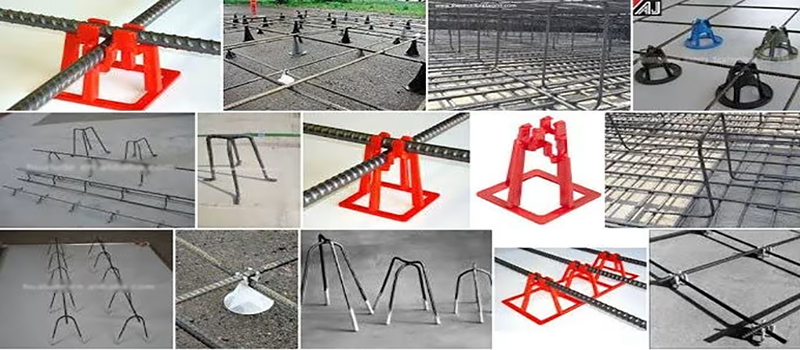
Les supports d'armature en acier et les entretoises en plastique ne sont pas de simples solutions de remplacement ; ils sont plutôt complémentaires.
Choisissez des chaises en acier pour les charges lourdes, les grandes portées et les fortes contraintes de construction – leur rigidité et leur fiabilité constituent le socle de la sécurité.
Choisissez des entretoises en plastique si vous privilégiez la rapidité de construction, la résistance à la corrosion, la durabilité et la qualité de surface – leur standardisation et leurs propriétés matérielles sont très intéressantes.
En tant que chef de projet, dépassez la simple logique du prix. Prenez en compte quatre facteurs essentiels : le type de structure, les conditions environnementales, les méthodes de construction et les objectifs de qualité. Parfois, la solution la plus pratique consiste à utiliser les deux matériaux dans un même élément (par exemple, des supports en acier pour la dalle de fondation et des entretoises en plastique pour les parois latérales).
En définitive, quel que soit votre choix, le respect strict des spécifications, l'acquisition de produits qualifiés et le renforcement des inspections sur site sont les moyens fondamentaux de garantir que le revêtement en béton réponde aux normes et que la structure atteigne une durabilité centenaire.
1. Q : Quelles sont les principales utilisations des entretoises en plastique ?
A : Ils contrôlent l'épaisseur de l'enrobage du béton, fixent la position des barres d'armature et préviennent la corrosion due à un enrobage insuffisant.
2. Q : Quels sont les avantages des entretoises en plastique ?
A: Fabriqué en usine avec une grande précision dimensionnelle, léger, facile à installer, résistant à la corrosion et peu coûteux.
3. Q : Quels sont les principaux problèmes liés aux entretoises en plastique ?
A : Faible résistance – se déforme ou s’endommage facilement lors de la construction ; faible adhérence au béton ; sujet au vieillissement ; faible durabilité à long terme ; et peut créer des voies d’infiltration d’eau.
4. Q : Que peut-on utiliser comme substitut si les entretoises en plastique sont interdites ?
A : Entretoises en béton préfabriqué haute résistance (rondes, type G), supports métalliques préfabriqués, clips de positionnement d’armatures de type F ou supports de type échelle.
5. (Numéro corrigé) Q : Quelles sont les spécifications standard pour les entretoises en plastique ?
A: Les normes internationalement reconnues comprennent : BS 7973:2001 (no
Whatsapp : +86 -13559234186
E-mail : sale@lscmagnetics.com
Tél : +86 -13559234186