
-

Envoyez-nous un courriel
sale@lscmagnetics.com -

Numéro de contact
+86 -13559234186
Envoyez-nous un courriel
sale@lscmagnetics.comNuméro de contact
+86 -13559234186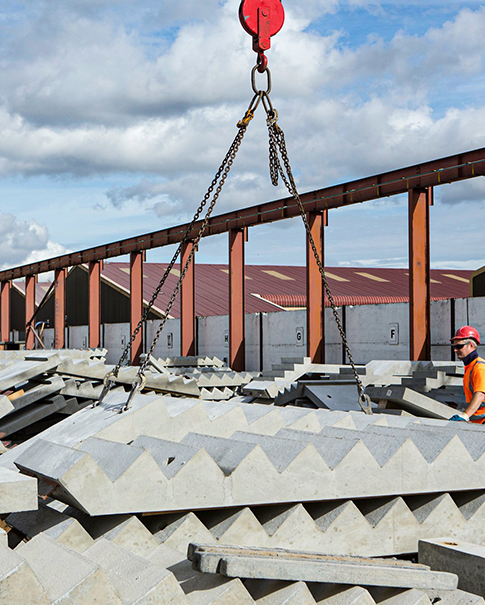

How to Choose the Right Lifting Clutch for Precast Concrete Panels?
Nov 11, 2026
In prefabricated building construction and precast component production, a single lifting error can mean scrapping an entire component, project delays, or even a safety accident. The lifting clutch, as the key load-bearing component connecting the crane to the embedded anchors, directly determines the safety margin during demolding, transport, and installation.
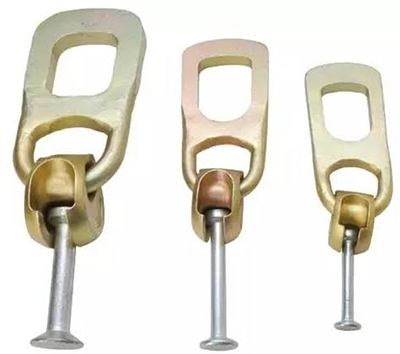
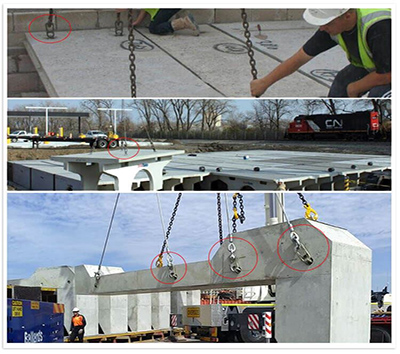
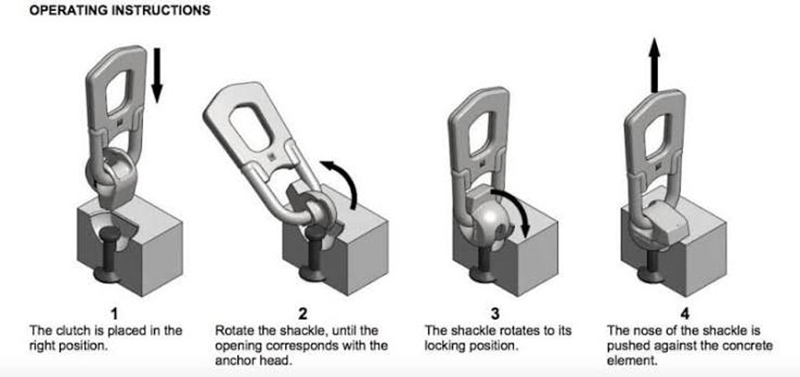
The lifting clutch enables rapid attachment and release by engaging a pre-embedded spherical-head lifting anchor. A common design is a lock body with an internal ball cavity: once the anchor ball head is inserted, the internal mechanism locks; during lifting and release, it is unlocked and disengaged by means of a lever, pull ring, or rotation.
Before selecting a model, three matching relationships must be confirmed:
Anchor head specification matching: The clutch cavity must correspond one-to-one with the diameter of the anchor ball head and the neck diameter. Systems from different manufacturers cannot be used interchangeably.
Locking mechanism type: Lever-type, pull-ring, and rotary mechanisms place different demands on operating space and sling angle.
Demolding method: Horizontal demolding and vertical lifting impose different force paths, which determine the anchor layout and clutch orientation.
Principle: The clutch–anchor–sling system must be selected as a complete set from the same manufacturer or the same certification system. Mixing components is a high-risk cause of accidents.
The Working Load Limit is the primary parameter, but it cannot be compared directly with the slab weight. The required WLL should be determined as follows:
Required WLL ≥ (Component self-weight × Dynamic coefficient × Angle coefficient × Load unevenness coefficient) ÷ Number of lifting points
Dynamic coefficient: Accounts for the impact of suction-cup/formwork adhesion and braking at the moment of demolding; typically taken as 1.3–1.5.
Angle coefficient: The smaller the angle between the sling and the plate surface, the greater the force at a single point. When the angle is β, the force is amplified by 1/sin β; at β = 30°, the single-point load almost doubles.
Uneven distribution: Uneven rigidity of the plate or height differences between lifting points can overload a given point. A 20%–30% margin is recommended, or a lifting beam with a load display should be used.
The nominal WLL of the clutch assumes that the anchorage is embedded in concrete of the specified strength and meets the minimum edge distance and embedment depth. When selecting a model, the following must be checked:
| Parameter | Impact | Selection Action |
| Concrete demolding strength | Insufficient strength sharply reduces anchorage capacity | Check the actual strength of the component, not just the design strength |
| Slab thickness | Determines the usable anchor length | Thick slabs require long anchors; thin slabs require a punching-shear check |
| Edge distance and spacing | Insufficient edge distance leads to cone failure | Increase WLL according to the manufacturer's table |
| Reinforcement / mesh | Affects local bearing pressure and crack propagation | Reinforcement in the anchorage zone should be detailed according to the manufacturer's drawings |
Rule of thumb: Anchorage failure is usually caused by the concrete cone being pulled out rather than by the steel breaking; slab thickness and edge distance are therefore often the governing conditions for bearing capacity.
Horizontal lifting (slab lifting for demolding): The load should be essentially vertical, in accordance with the coefficients above.
Tilting/inclined lifting: Anchors are subjected to combined tension and shear. Only certified models that permit tilting may be selected, and the angle must not exceed the manufacturer's limit.
Multi-point lifting of slabs: Confirm that the height difference between lifting points is within the allowable range to prevent the clutch from being subjected to a lateral bending moment.
Outdoor storage yards and coastal projects: Specify hot-dip galvanized or stainless steel materials to avoid stress corrosion.
Low-temperature environments: Check low-temperature impact toughness to avoid cold brittleness.
Number of reuses: Record the number of cycles and scrap the clutch once the manufacturer's specified service life is reached.
Export projects or foreign-invested enterprises typically require:
EU: CE marking plus a Declaration of Performance (DoP), with anchorage design conforming to EN 1992 (Eurocode 2).
Commonwealth systems: BS 7973 specifications for the use of lifting anchors and clutches.
Domestic projects: Compliance with GB/T 51231, the technical standard for precast concrete buildings, and related regulations for precast structures; products with third-party test reports should be prioritized.
When requesting documents, pay close attention to type test reports, destructive test data corresponding to the WLL, and the certification scope of the matching anchors.
On the production line, demolding speed directly affects cycle time. Frontline operators should be involved in the evaluation during selection:
Is the insertion and extraction force excessive? (Higher-WLL clutch mechanisms are heavier, so operator strength must be considered.)
Can the unlocking action be performed with one hand at height or on scaffolding?
Does it support unlocking under load (strictly prohibited in some designs), and is the anti-accidental-disengagement mechanism reliable?
| Failure mode | Typical causes | Prevention |
| Cone pull-out failure | Low concrete strength, small edge distance | Confirm strength with companion test blocks before demolding; increase edge distance according to the manufacturer's charts |
| Anchor head slippage | Wear of the ball head and clutch, mixing of different systems | Visually check the locking status before each use; do not mix systems |
| Sling breakage / single-point overload | Angle too small, uneven load distribution | Use balance beams; keep the sling angle ≥ 60° |
| Slab cracking | Insufficient reinforcement in the anchorage zone, local stress concentration | Follow the manufacturer's reinforcement drawings; consider reducing lifting-point spacing for thin slabs |
Load calculation: Determine the slab weight, number of lifting points, and dynamic and angle coefficients to obtain the required WLL per point.
System selection: Select a complete anchorage + clutch system and confirm that the anchor head specifications match.
Embedding calibration: Compare with slab thickness, edge distance, and actual concrete strength to confirm whether the WLL must be reduced or is acceptable.
Function selection: Determine the locking method and material based on demolding, turning, and high-altitude operation requirements.
Documentation: Collect certifications, test reports, and reinforcement drawings.
Testing: Conduct trial demolding of the first batch of components to observe anchorage cracks and smooth disengagement.
Record-keeping: Record the usage frequency, inspection, and scrapping status of each clutch.
Q: Can lifting clutches and anchorages from different brands be used interchangeably?
Not recommended. Although the ball head dimensions may be similar, tolerances, locking strokes, and certification boundaries differ. Mixing them takes the system outside its certified scope, and insurance and liability determinations may also be invalidated.
Q: What concrete strength is required for demolding and hoisting?
Follow the manufacturer's technical documents. Common requirements are approximately 70% of the design value and no less than 10–15 MPa, while also satisfying the verification requirements of companion test blocks; low-temperature or early-strength systems require separate confirmation.
Q: Can two clutches share the load at one lifting point?
Only feasible if explicitly permitted by the manufacturer and confirmed by calculation. Most systems require a one-to-one correspondence; parallel use introduces uncertainty in load distribution and risks of interference.
Q: How can I tell when a clutch should be scrapped?
A clutch should be scrapped if it exhibits poor locking, obvious wear of the ball cavity (which can be checked with a gauge), cracks, severe corrosion or deformation, or if it has reached the manufacturer's specified number of cycles.
Whatsapp : +86 -13559234186
E-mail : sale@lscmagnetics.com
Tél : +86 -13559234186